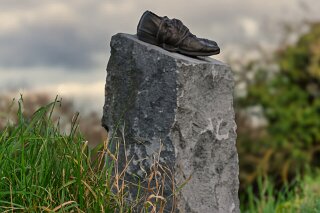
THE BRONZE SHOES AT THE 6TH LOCK ON THE ROYAL CANAL
FAMINE STATUES - BRONZE SHOES [NEAR THE 6TH LOCK ON THE ROYAL CANAL]
🇮🇪 The National Famine Way:
Ireland’s National Famine Way is a poignant and immersive 165 km cross-country pilgrim walk that traces the steps of the Strokestown famine emigrants of 1847. More than just a route, it is a journey layered with history, art, and culture. The trail weaves through country lanes, villages, towns, and Dublin city, predominantly following the historic banks of the Royal Canal. It offers flexibility, as it can be completed in sections or all at once, allowing walkers to choose their own pace. The emigrants’ tragic yet hopeful journey is marked by 30 pairs of evocative bronze shoe sculptures spaced out along the entire route. This remarkable trail is bookended by iconic museums: the National Famine Museum at Strokestown Park in Co. Roscommon, and in Dublin, the Jeanie Johnston Famine Ship and EPIC The Irish Emigration Museum.
👟 Symbolism of the Bound Shoes
The inspiration for the bronze shoe sculptures came from a remarkable discovery: a pair of nineteenth-century bound children's shoes found in the roof of a ruined cottage by a local farmer. The shoes were subsequently donated to the National Famine Museum at Strokestown Park. While the identity of the child remains a mystery, local folklore suggests such offerings were made to invoke good luck. These poignant, small shoes powerfully symbolise the difficult and hopeful journey undertaken by the 1,490 emigrants, two-thirds of whom were children. The very act of them being bound suggests the hardships they faced and the eternal, emotional bind to the home and land they were leaving behind forever.
Context and Historical Significance
The National Famine Way is specifically dedicated to commemorating the 1,490 tenants of Major Denis Mahon (the landlord of the Strokestown Estate), who were forced to emigrate from Strokestown to Quebec, Canada, in 1847, during An Gorta Mór (The Great Hunger).
The journey was a forced clearance, following the assassination of Major Mahon. The tenants walked from Strokestown to Dublin, where they boarded the infamous "coffin ships." It is estimated that up to half of them perished either during the canal walk, on the voyage itself, or upon arrival on Grosse Île, the quarantine island in the St. Lawrence River. The trail, therefore, serves as a deeply meaningful memorial and educational experience, allowing contemporary walkers to connect physically and emotionally with one of the darkest periods in Irish history and its lasting impact on global migration.
🇮🇪 The National Famine Way:
Ireland’s National Famine Way is a poignant and immersive 165 km cross-country pilgrim walk that traces the steps of the Strokestown famine emigrants of 1847. More than just a route, it is a journey layered with history, art, and culture. The trail weaves through country lanes, villages, towns, and Dublin city, predominantly following the historic banks of the Royal Canal. It offers flexibility, as it can be completed in sections or all at once, allowing walkers to choose their own pace. The emigrants’ tragic yet hopeful journey is marked by 30 pairs of evocative bronze shoe sculptures spaced out along the entire route. This remarkable trail is bookended by iconic museums: the National Famine Museum at Strokestown Park in Co. Roscommon, and in Dublin, the Jeanie Johnston Famine Ship and EPIC The Irish Emigration Museum.
👟 Symbolism of the Bound Shoes
The inspiration for the bronze shoe sculptures came from a remarkable discovery: a pair of nineteenth-century bound children's shoes found in the roof of a ruined cottage by a local farmer. The shoes were subsequently donated to the National Famine Museum at Strokestown Park. While the identity of the child remains a mystery, local folklore suggests such offerings were made to invoke good luck. These poignant, small shoes powerfully symbolise the difficult and hopeful journey undertaken by the 1,490 emigrants, two-thirds of whom were children. The very act of them being bound suggests the hardships they faced and the eternal, emotional bind to the home and land they were leaving behind forever.
Context and Historical Significance
The National Famine Way is specifically dedicated to commemorating the 1,490 tenants of Major Denis Mahon (the landlord of the Strokestown Estate), who were forced to emigrate from Strokestown to Quebec, Canada, in 1847, during An Gorta Mór (The Great Hunger).
The journey was a forced clearance, following the assassination of Major Mahon. The tenants walked from Strokestown to Dublin, where they boarded the infamous "coffin ships." It is estimated that up to half of them perished either during the canal walk, on the voyage itself, or upon arrival on Grosse Île, the quarantine island in the St. Lawrence River. The trail, therefore, serves as a deeply meaningful memorial and educational experience, allowing contemporary walkers to connect physically and emotionally with one of the darkest periods in Irish history and its lasting impact on global migration.
THE FAMINE SHOES