ABOUT THREE SCULPTURES WITH SOMETHING IN COMMON
Concrete Memories: The Lost, The Moved, and The Resilient Sculptures of Belfast’s Linen Quarter
Stand outside the modern entrance of the Maldron Hotel on Brunswick Street today, and you are standing in the heart of Belfast’s newly polished "Linen Quarter." It is an area of sleek grey paving, new student accommodation blocks, and the rebranded "FLAXX" social space in Blackstaff Square, complete with a pétanque court and bright street art.
The area has undeniably been regenerated. It feels cleaner, safer, and more corporate than the slightly scruffy, forgotten corner it was twenty years ago. But in the rush to modernise this chunk of the city centre, we must ask: what layers of history have been scrubbed away?
A walk of less than five hundred yards around this block reveals the curious tale of three public artworks. One has vanished into thin air, one was shunted sideways to hide a gritty past, and one stands defiantly nearby. Together, they tell a story of how Belfast remembers—and conveniently forgets—its own history.
The Vanished Butterfly: "Regeneration"
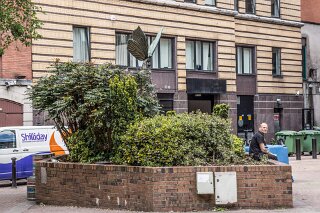
If you stood in Blackstaff Square in the 1990s or 2000s, looking towards where the Maldron now towers, you might have noticed a curious sculpture nestled in a brick planter, often slightly obscured by overgrown bushes.
This was "Regeneration," a piece commissioned in 1993 by renowned artist Anna Cheyne (1926–2002). Crafted from bronze and fibre-glass, it depicted a caterpillar transforming into a butterfly. It was a literal, perhaps slightly naive, metaphor for a city desperately trying to emerge from the chrysalis of the Troubles into a brighter economic future.
The supreme irony of this sculpture is in its fate. Around May 2015, the diggers moved in to clear the site of the old Belfast Metropolitan College to build the new hotels and accommodation that define the area today. To make way for actual physical regeneration, the symbolic sculpture called "Regeneration" was removed.
There appears to be no public record of where it went. It was likely crated up and put into council or developer storage, awaiting a new home that never materialised. Today, its existence seems entirely forgotten. Even long-serving staff in the surrounding businesses have no memory of the bronze butterfly that once sat on their doorstep. It is a piece of art erased by the very future it tried to predict.
The "Shady Ladies" Shunted Sideways
Just around the corner from the Maldron, standing proudly on the main thoroughfare of Great Victoria Street outside the Europa Hotel, are two formidable bronze women.
This is the "Monument to the Unknown Woman Worker" by artist Louise Walsh. It is one of Belfast’s most recognisable artworks, a powerful tribute to low-paid female labour, domestic drudgery, and the resilience of working-class women.
But they aren't supposed to be there.
In the late 1980s, the statue was commissioned specifically for Amelia Street—the narrow street running down the side of the Crown Bar towards the current Maldron hotel. The brief required the art to reflect the history of the immediate area. The artist, Louise Walsh, did her research and discovered Amelia Street’s history as a notorious "red-light" district.
She designed her "working women" to encompass all forms of female labour, including sex work, incorporating household items like colanders and graters into the bronze fabric of their being. When the design was revealed, Belfast City Council and local developers were horrified. They deemed the reference to the area’s gritty reality "immoral" and refused to install it.
They wanted regeneration art that sanitised history, not art that highlighted it.
The project was dropped until a private developer, amused by the controversy of the so-called "shady ladies," bought the piece and installed it on their land around the corner in 1992. Today, tourists snap photos of it, unaware that it was an architectural refugee banned from its original home just a few yards away.
The Resilience of Sandy Row
If you continue your walk just a little further south, crossing the busy intersection towards Sandy Row, you will find a third piece of the puzzle, standing near the corner of Donegall Road.
This is "Mother, Daughter, Sister," also by Louise Walsh.
Unlike the transient nature of the art in the transient Linen Quarter, this sculpture seems rooted to the spot. Commissioned in the early 2000s, it features three generations of women. It is bold, somewhat stark, and deeply connected to the surrounding working-class community of Sandy Row.
While the butterfly vanished when the developers moved in, and the "working women" were moved along to a more "respectable" street frontage, the women of Sandy Row stand firm. They serve as a reminder that while city centres might get rebranded with sleek hotels and catchy names like "FLAXX," real communities with deep, difficult, and proud histories remain just beneath the surface.
The next time you walk down Brunswick Street, enjoy the new paving, but spare a thought for the bronze caterpillar that didn’t survive the metamorphosis.
Stand outside the modern entrance of the Maldron Hotel on Brunswick Street today, and you are standing in the heart of Belfast’s newly polished "Linen Quarter." It is an area of sleek grey paving, new student accommodation blocks, and the rebranded "FLAXX" social space in Blackstaff Square, complete with a pétanque court and bright street art.
The area has undeniably been regenerated. It feels cleaner, safer, and more corporate than the slightly scruffy, forgotten corner it was twenty years ago. But in the rush to modernise this chunk of the city centre, we must ask: what layers of history have been scrubbed away?
A walk of less than five hundred yards around this block reveals the curious tale of three public artworks. One has vanished into thin air, one was shunted sideways to hide a gritty past, and one stands defiantly nearby. Together, they tell a story of how Belfast remembers—and conveniently forgets—its own history.
The Vanished Butterfly: "Regeneration"
If you stood in Blackstaff Square in the 1990s or 2000s, looking towards where the Maldron now towers, you might have noticed a curious sculpture nestled in a brick planter, often slightly obscured by overgrown bushes.
This was "Regeneration," a piece commissioned in 1993 by renowned artist Anna Cheyne (1926–2002). Crafted from bronze and fibre-glass, it depicted a caterpillar transforming into a butterfly. It was a literal, perhaps slightly naive, metaphor for a city desperately trying to emerge from the chrysalis of the Troubles into a brighter economic future.
The supreme irony of this sculpture is in its fate. Around May 2015, the diggers moved in to clear the site of the old Belfast Metropolitan College to build the new hotels and accommodation that define the area today. To make way for actual physical regeneration, the symbolic sculpture called "Regeneration" was removed.
There appears to be no public record of where it went. It was likely crated up and put into council or developer storage, awaiting a new home that never materialised. Today, its existence seems entirely forgotten. Even long-serving staff in the surrounding businesses have no memory of the bronze butterfly that once sat on their doorstep. It is a piece of art erased by the very future it tried to predict.
The "Shady Ladies" Shunted Sideways
Just around the corner from the Maldron, standing proudly on the main thoroughfare of Great Victoria Street outside the Europa Hotel, are two formidable bronze women.
This is the "Monument to the Unknown Woman Worker" by artist Louise Walsh. It is one of Belfast’s most recognisable artworks, a powerful tribute to low-paid female labour, domestic drudgery, and the resilience of working-class women.
But they aren't supposed to be there.
In the late 1980s, the statue was commissioned specifically for Amelia Street—the narrow street running down the side of the Crown Bar towards the current Maldron hotel. The brief required the art to reflect the history of the immediate area. The artist, Louise Walsh, did her research and discovered Amelia Street’s history as a notorious "red-light" district.
She designed her "working women" to encompass all forms of female labour, including sex work, incorporating household items like colanders and graters into the bronze fabric of their being. When the design was revealed, Belfast City Council and local developers were horrified. They deemed the reference to the area’s gritty reality "immoral" and refused to install it.
They wanted regeneration art that sanitised history, not art that highlighted it.
The project was dropped until a private developer, amused by the controversy of the so-called "shady ladies," bought the piece and installed it on their land around the corner in 1992. Today, tourists snap photos of it, unaware that it was an architectural refugee banned from its original home just a few yards away.
The Resilience of Sandy Row
If you continue your walk just a little further south, crossing the busy intersection towards Sandy Row, you will find a third piece of the puzzle, standing near the corner of Donegall Road.
This is "Mother, Daughter, Sister," also by Louise Walsh.
Unlike the transient nature of the art in the transient Linen Quarter, this sculpture seems rooted to the spot. Commissioned in the early 2000s, it features three generations of women. It is bold, somewhat stark, and deeply connected to the surrounding working-class community of Sandy Row.
While the butterfly vanished when the developers moved in, and the "working women" were moved along to a more "respectable" street frontage, the women of Sandy Row stand firm. They serve as a reminder that while city centres might get rebranded with sleek hotels and catchy names like "FLAXX," real communities with deep, difficult, and proud histories remain just beneath the surface.
The next time you walk down Brunswick Street, enjoy the new paving, but spare a thought for the bronze caterpillar that didn’t survive the metamorphosis.
THREE SCULPTURES