THE ART AND THE ARTIST AND THE LOCATION
A VERY LONG MURAL AT CITY QUAY [IT WAS IMMEDIATELY OBVIOUS TO ME THAT IT IS THE WORK OF HOLLY PEREIRA]
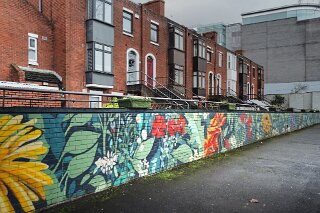
This vibrant and exceptionally long mural is a prominent feature of City Quay in Dublin, located on the south bank of the River Liffey.
About the Mural
The mural, which stretches along a significant length of the low wall bordering the pavement and residential area, is titled "The Pollinator Wall". It was created by the Irish artist Holly Pereira in collaboration with Dublin City Council and local community groups.
Theme: The artwork is a celebration of Irish biodiversity, specifically focusing on the importance of pollinators like bees and butterflies. It features a continuous, colourful sequence of native Irish wildflowers, including dandelions, poppies, and ox-eye daisies, set against a lush green background.
Purpose: Beyond its aesthetic appeal, the mural was designed to brighten the "urban canyon" of the quays and raise awareness about the All-Ireland Pollinator Plan. It transforms a once-grey transit route into a "wildflower meadow" for pedestrians.
Style: Pereira is known for her bold, graphic, and colourful style, often blending flora with typography or folk-art motifs.
A Short Account of City Quay
City Quay is one of Dublin’s oldest and most historically significant quayside areas. Situated between Tara Street and the Samuel Beckett Bridge, it has undergone a dramatic transformation over the centuries.
Maritime History: Established in 1715, it was once a bustling hub for the coal trade and shipping. For decades, it was defined by the presence of sailors, stevedores, and the constant unloading of cargo.
Community and Church: The heart of the area is the Church of the Immaculate Heart of Mary, built in 1863 to serve the growing population of seafarers and dock workers. The parish remains a tight-knit community despite the surrounding modernisation.
Regeneration: In the late 20th century, the area suffered from urban decay as shipping moved further downstream to the deep-water port. However, it has since been revitalised as part of the Dublin Docklands development. Today, historic red-brick social housing (visible in your photo) sits in the shadow of modern glass-and-steel offices and luxury apartments.
Modern Identity: City Quay is now a vital link between the traditional city centre and the high-tech "Silicon Docks" area, blending its gritty industrial heritage with contemporary urban art and architecture.
This vibrant and exceptionally long mural is a prominent feature of City Quay in Dublin, located on the south bank of the River Liffey.
About the Mural
The mural, which stretches along a significant length of the low wall bordering the pavement and residential area, is titled "The Pollinator Wall". It was created by the Irish artist Holly Pereira in collaboration with Dublin City Council and local community groups.
Theme: The artwork is a celebration of Irish biodiversity, specifically focusing on the importance of pollinators like bees and butterflies. It features a continuous, colourful sequence of native Irish wildflowers, including dandelions, poppies, and ox-eye daisies, set against a lush green background.
Purpose: Beyond its aesthetic appeal, the mural was designed to brighten the "urban canyon" of the quays and raise awareness about the All-Ireland Pollinator Plan. It transforms a once-grey transit route into a "wildflower meadow" for pedestrians.
Style: Pereira is known for her bold, graphic, and colourful style, often blending flora with typography or folk-art motifs.
A Short Account of City Quay
City Quay is one of Dublin’s oldest and most historically significant quayside areas. Situated between Tara Street and the Samuel Beckett Bridge, it has undergone a dramatic transformation over the centuries.
Maritime History: Established in 1715, it was once a bustling hub for the coal trade and shipping. For decades, it was defined by the presence of sailors, stevedores, and the constant unloading of cargo.
Community and Church: The heart of the area is the Church of the Immaculate Heart of Mary, built in 1863 to serve the growing population of seafarers and dock workers. The parish remains a tight-knit community despite the surrounding modernisation.
Regeneration: In the late 20th century, the area suffered from urban decay as shipping moved further downstream to the deep-water port. However, it has since been revitalised as part of the Dublin Docklands development. Today, historic red-brick social housing (visible in your photo) sits in the shadow of modern glass-and-steel offices and luxury apartments.
Modern Identity: City Quay is now a vital link between the traditional city centre and the high-tech "Silicon Docks" area, blending its gritty industrial heritage with contemporary urban art and architecture.
THE ART AND THE ARTIST