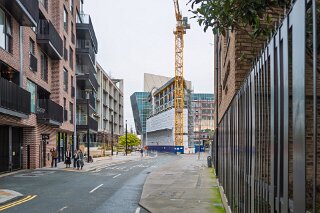
GRAND CANAL SQUARE PHOTOGRAPHED USING A LEICA Q3
GRAND CANAL SQUARE IN DUBLIN DOCKLANDS [21 DECEMBER 2025]
Grand Canal Square is the primary public plaza of Dublin’s rejuvenated South Docklands. Since its opening in 2007, it has evolved into a symbol of modern Ireland—a sleek, cosmopolitan hub that stands in stark contrast to the city’s traditional Georgian aesthetic.
The Square Today
Designed by the renowned American landscape architect Martha Schwartz, the 10,000-square-metre square is one of the largest paved public spaces in Dublin. It is instantly recognisable for its bold "Red Carpet"—a path of bright red resin-glass paving that extends from the theatre towards the water. This is punctuated by angled, glowing red light sticks that create a theatrical atmosphere after sunset.
The square is framed by several architectural landmarks:
Bord Gáis Energy Theatre: Designed by Daniel Libeskind, its crystalline glass-and-steel façade acts as the square’s dramatic focal point.
Anantara The Marker Hotel: A striking building with a geometric, textured façade inspired by the Giant’s Causeway.
Silicon Docks: The surrounding glass offices house the European headquarters of global tech giants like Google, Meta, and Airbnb, giving the area a high-energy, international atmosphere.
Today, it is a "social magnet" where office workers eat lunch, tourists photograph the architecture, and theatre-goers gather before shows.
Historical Background
The area's history is rooted in Dublin’s industrial past:
The Original Docks (1796): When the Grand Canal Docks first opened, they were the largest in the world. They served as the vital link between the River Liffey and the inland canal system, facilitating the trade of coal, grain, and timber.
Industrial Decline: By the mid-20th century, the arrival of containerisation and the decline of canal traffic left the area derelict. For decades, it was a desolate post-industrial landscape of gasworks, chemical factories, and "mountains of coal."
Regeneration (1990s–2000s): The Dublin Docklands Development Authority (DDDA) led a massive cleanup of the toxic former gasworks site. The regeneration aimed to turn the derelict quays into a "modern urban village."
A Modern Landmark: Grand Canal Square was the crowning achievement of this process, designed to provide a high-quality public realm that would attract global investment. Despite the 2008 financial crash temporarily slowing its growth, the square is now the thriving centre of Dublin’s most modern quarter.
Grand Canal Square is the primary public plaza of Dublin’s rejuvenated South Docklands. Since its opening in 2007, it has evolved into a symbol of modern Ireland—a sleek, cosmopolitan hub that stands in stark contrast to the city’s traditional Georgian aesthetic.
The Square Today
Designed by the renowned American landscape architect Martha Schwartz, the 10,000-square-metre square is one of the largest paved public spaces in Dublin. It is instantly recognisable for its bold "Red Carpet"—a path of bright red resin-glass paving that extends from the theatre towards the water. This is punctuated by angled, glowing red light sticks that create a theatrical atmosphere after sunset.
The square is framed by several architectural landmarks:
Bord Gáis Energy Theatre: Designed by Daniel Libeskind, its crystalline glass-and-steel façade acts as the square’s dramatic focal point.
Anantara The Marker Hotel: A striking building with a geometric, textured façade inspired by the Giant’s Causeway.
Silicon Docks: The surrounding glass offices house the European headquarters of global tech giants like Google, Meta, and Airbnb, giving the area a high-energy, international atmosphere.
Today, it is a "social magnet" where office workers eat lunch, tourists photograph the architecture, and theatre-goers gather before shows.
Historical Background
The area's history is rooted in Dublin’s industrial past:
The Original Docks (1796): When the Grand Canal Docks first opened, they were the largest in the world. They served as the vital link between the River Liffey and the inland canal system, facilitating the trade of coal, grain, and timber.
Industrial Decline: By the mid-20th century, the arrival of containerisation and the decline of canal traffic left the area derelict. For decades, it was a desolate post-industrial landscape of gasworks, chemical factories, and "mountains of coal."
Regeneration (1990s–2000s): The Dublin Docklands Development Authority (DDDA) led a massive cleanup of the toxic former gasworks site. The regeneration aimed to turn the derelict quays into a "modern urban village."
A Modern Landmark: Grand Canal Square was the crowning achievement of this process, designed to provide a high-quality public realm that would attract global investment. Despite the 2008 financial crash temporarily slowing its growth, the square is now the thriving centre of Dublin’s most modern quarter.
GRAND CANAL SQUARE