HOW I MANAGED TO IGNORE A MUSEUM
Tempus Fugit and the Fleeting Wall - David Maker and the Museum of Time
In August 2025, during a photography outing in Waterford, my primary focus was documenting a new mural by street artist David Maker on Greyfriars Street. At the time, I paid little attention to the large sculptural clock arch framing the adjoining courtyard, assuming it was decorative signage rather than an artistic civic installation in its own right.
My introduction to the concept of the museum went back further. During a visit to Waterford in 2019, I had dinner at McLeary’s Restaurant on the Quay. There was only one other diner in the room. He struck up a conversation about the camera on my table and mentioned he was working on plans to establish a dedicated clock museum in the city. That gentleman was Eamonn McEneaney, Director of Waterford Treasures, who was then in the process of bringing the vision to life alongside founding benefactors David Boles and Colman Curran. On 14 June 2021, Waterford Treasures: Irish Museum of Time officially opened its doors inside the refurbished 1880s Gothic Revival Methodist Church on Greyfriars Street. When I passed through later in 2021, the city was still emerging from pandemic restrictions, and the conversation had faded from memory.
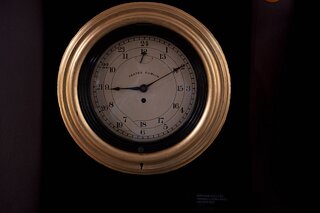
Returning to Waterford in August 2026, I stayed at the Granville Hotel, where I met a retired teacher and his wife who spoke enthusiastically about their visit to Ireland’s National Horological Museum. Realising this was the very collection discussed years earlier, I went to document the interior galleries.
Reviewing my archive back in Dublin, I uncovered unpublished frames from August 2025 showing Maker’s mural alongside the courtyard sculpture: Tempus Fugit (Time Flies), designed by artists Liam Lavery and Eithne Ring. Maker, an acclaimed muralist associated with the Waterford Walls festival and Street Art Ink—who also collaborated on the landmark mural at The Book Centre on Peter Street—had created the piece as part of a multi-year maritime heritage series. Among the technical blueprints and nautical elements, Maker included a painted lifebelt marked SS Formby, a direct visual link to the Formby–Coningbeg Memorial standing nearby on Waterford's Quay, which commemorates the 83 souls lost when both Clyde Shipping steamers were torpedoed by a German U-boat in December 1917.
There is a poignant resonance in finding Maker’s maritime tribute set against Tempus Fugit and the museum walls, where Shakespeare’s words from Richard II linger in the air: “I wasted time, and now doth time waste me.” While the horological masterworks inside record the steady tick of seconds and hours, the outdoor canvas tells a story of transience. Time ran out abruptly for the seafarers of the Formby and Coningbeg; likewise, street art is defined by its impermanence, exposed to the elements and destined to fade. By August 2026, Tempus Fugit had claimed the wall once more: Maker’s piece had completed its cycle, making way as fresh coats of paint and a new mural took shape across the stone.
In August 2025, during a photography outing in Waterford, my primary focus was documenting a new mural by street artist David Maker on Greyfriars Street. At the time, I paid little attention to the large sculptural clock arch framing the adjoining courtyard, assuming it was decorative signage rather than an artistic civic installation in its own right.
My introduction to the concept of the museum went back further. During a visit to Waterford in 2019, I had dinner at McLeary’s Restaurant on the Quay. There was only one other diner in the room. He struck up a conversation about the camera on my table and mentioned he was working on plans to establish a dedicated clock museum in the city. That gentleman was Eamonn McEneaney, Director of Waterford Treasures, who was then in the process of bringing the vision to life alongside founding benefactors David Boles and Colman Curran. On 14 June 2021, Waterford Treasures: Irish Museum of Time officially opened its doors inside the refurbished 1880s Gothic Revival Methodist Church on Greyfriars Street. When I passed through later in 2021, the city was still emerging from pandemic restrictions, and the conversation had faded from memory.
Returning to Waterford in August 2026, I stayed at the Granville Hotel, where I met a retired teacher and his wife who spoke enthusiastically about their visit to Ireland’s National Horological Museum. Realising this was the very collection discussed years earlier, I went to document the interior galleries.
Reviewing my archive back in Dublin, I uncovered unpublished frames from August 2025 showing Maker’s mural alongside the courtyard sculpture: Tempus Fugit (Time Flies), designed by artists Liam Lavery and Eithne Ring. Maker, an acclaimed muralist associated with the Waterford Walls festival and Street Art Ink—who also collaborated on the landmark mural at The Book Centre on Peter Street—had created the piece as part of a multi-year maritime heritage series. Among the technical blueprints and nautical elements, Maker included a painted lifebelt marked SS Formby, a direct visual link to the Formby–Coningbeg Memorial standing nearby on Waterford's Quay, which commemorates the 83 souls lost when both Clyde Shipping steamers were torpedoed by a German U-boat in December 1917.
There is a poignant resonance in finding Maker’s maritime tribute set against Tempus Fugit and the museum walls, where Shakespeare’s words from Richard II linger in the air: “I wasted time, and now doth time waste me.” While the horological masterworks inside record the steady tick of seconds and hours, the outdoor canvas tells a story of transience. Time ran out abruptly for the seafarers of the Formby and Coningbeg; likewise, street art is defined by its impermanence, exposed to the elements and destined to fade. By August 2026, Tempus Fugit had claimed the wall once more: Maker’s piece had completed its cycle, making way as fresh coats of paint and a new mural took shape across the stone.
THE MORAL AND THE MUSEUM