THIS WAS MY FIRST VISIT TO THE MUSEUM
THE IRISH MUSEUM OF TIME [IRELAND'S NATIONAL HOROLOGICAL MUSEUM]
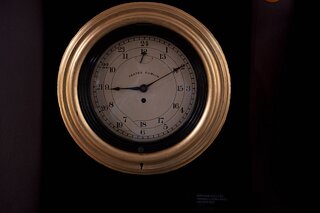
This was an unplanned visit and I had great difficulty photographing some of the items on display as the camera had a fixed lens. However I remembered that in another museum a guide had suggested to me that I should use zone focusing as I had a Leica so that is what I tried and this is discussed in detail below.
The Irish Museum of Time (Ireland's National Horological Museum) is dedicated to the craft, science, and history of timekeeping. Situated in Waterford—Ireland's oldest city—the museum brings together centuries of domestic and international horological heritage.
Irish Museum of Time in Waterford's Viking Triangle.
Location and Building History
The Location: Waterford’s Viking Triangle
The museum is located on Greyfriars Street within Waterford’s Viking Triangle, the historic core settled by Norse invaders in the 10th century. Over centuries, this compact district evolved through Anglo-Norman, medieval, and Georgian eras, now functioning as Waterford’s cultural museum quarter. Greyfriars Street takes its name from the adjacent 13th-century Franciscan friary ruins (the "French Church").
The Building: A 19th-Century Neo-Gothic Church
Origins: The main structure was erected in the 1880s as a Methodist Church, constructed in the Neo-Gothic style with pointed-arch windows, cut-stone masonry, and vaulted timber ceilings.
Deconsecration & Reuse: After serving its congregation for decades, the church ceased active religious worship and fell disused.
Restoration: Between 2018 and 2021, Waterford City and County Council, alongside the Waterford Treasures collective, comprehensively restored and refitted the church into a modern museum space while preserving its architectural character.
Expansion (Central Hall): The museum expanded into the adjoining 19th-century Central Hall (a former church and later arts venue) to create additional gallery spaces and an audio-visual theatre.
Inception and Creation of the Museum
The museum was born from the vision of long-standing Irish horologists David Boles, Colman Curran, and Curran's wife Elizabeth Clooney.
The Vision (2013–2015): Realising their irreplaceable personal collections risked dispersal at auction, Curran and Boles sought a permanent national home.
Partnership with Waterford Treasures: In 2015, Curran met Eamonn McEneaney, Director of Waterford Treasures. Alongside Waterford City Council CEO Michael Walsh, the project found its location on Greyfriars Street.
Opening: The Irish Museum of Time officially opened on 14 June 2021.
Exterior Monument: On the 2022 winter solstice, the museum unveiled "Tempus Fugit", a six-metre-wide outdoor steel winged clock designed by Cork sculptors Liam Lavery and Eithne Ring.
Funding Model
The museum operates on a public-philanthropic partnership:
Philanthropic Endowment: The core assets were entirely gifted. The initial horological donations by David Boles, Colman Curran, and Elizabeth Clooney were valued at hundreds of thousands of euros. Further benefaction by Boles funded major international acquisitions and the Central Hall gallery fit-out.
Civic and Public Investment: Restoration of the historic buildings, ongoing maintenance, and operations are managed under Waterford Treasures with capital and infrastructure backing from Waterford City & County Council and national heritage development schemes.
Self-Generated Revenue: Admissions through single tickets and the consolidated "Freedom of Waterford" museum pass help sustain ongoing conservational and administrative costs.
International Relevance
The museum holds significance well beyond Ireland:
The Anchor Escapement Benchmark: It houses the London-made William Clement clock from 1663, the world's earliest surviving timepiece fitted with an anchor escapement—the mechanical innovation that first made clocks accurate to the minute and second.
The Black Forest Cuckoo Clock Collection: Following the acquisition and restoration of the famous Piekarski collection (formerly of England's Cuckooland Museum), the museum exhibits over 400 19th-century Black Forest cuckoo clocks and automata, representing one of the largest public collections in the world.
Global Comparative Holdings: Alongside Irish makers (such as master craftsmen from Dublin, Cork, and Belfast), the museum displays items from the UK, the US, Switzerland, Austria, France, Germany, the Netherlands, Russia, and Japan, with pieces dating back to 1551.
Local and National Significance
Within Ireland, the museum serves as the country's sole dedicated horological institution. Prior to its founding, Ireland lacked a centralised repository showcasing the evolution of domestic clockmaking from the late 17th century through the Industrial Revolution.
Locally, it is a key anchor of the Waterford Treasures trail (which includes Reginald's Tower, the Medieval Museum, the Bishop's Palace, the Irish Wake Museum, and the Silver Museum). It generates cultural tourism across Ireland's Ancient East, drawing international collectors, historians, and school groups engaged in STEM education through its mechanical exhibits.
This was an unplanned visit and I had great difficulty photographing some of the items on display as the camera had a fixed lens. However I remembered that in another museum a guide had suggested to me that I should use zone focusing as I had a Leica so that is what I tried and this is discussed in detail below.
The Irish Museum of Time (Ireland's National Horological Museum) is dedicated to the craft, science, and history of timekeeping. Situated in Waterford—Ireland's oldest city—the museum brings together centuries of domestic and international horological heritage.
Irish Museum of Time in Waterford's Viking Triangle.
Location and Building History
The Location: Waterford’s Viking Triangle
The museum is located on Greyfriars Street within Waterford’s Viking Triangle, the historic core settled by Norse invaders in the 10th century. Over centuries, this compact district evolved through Anglo-Norman, medieval, and Georgian eras, now functioning as Waterford’s cultural museum quarter. Greyfriars Street takes its name from the adjacent 13th-century Franciscan friary ruins (the "French Church").
The Building: A 19th-Century Neo-Gothic Church
Origins: The main structure was erected in the 1880s as a Methodist Church, constructed in the Neo-Gothic style with pointed-arch windows, cut-stone masonry, and vaulted timber ceilings.
Deconsecration & Reuse: After serving its congregation for decades, the church ceased active religious worship and fell disused.
Restoration: Between 2018 and 2021, Waterford City and County Council, alongside the Waterford Treasures collective, comprehensively restored and refitted the church into a modern museum space while preserving its architectural character.
Expansion (Central Hall): The museum expanded into the adjoining 19th-century Central Hall (a former church and later arts venue) to create additional gallery spaces and an audio-visual theatre.
Inception and Creation of the Museum
The museum was born from the vision of long-standing Irish horologists David Boles, Colman Curran, and Curran's wife Elizabeth Clooney.
The Vision (2013–2015): Realising their irreplaceable personal collections risked dispersal at auction, Curran and Boles sought a permanent national home.
Partnership with Waterford Treasures: In 2015, Curran met Eamonn McEneaney, Director of Waterford Treasures. Alongside Waterford City Council CEO Michael Walsh, the project found its location on Greyfriars Street.
Opening: The Irish Museum of Time officially opened on 14 June 2021.
Exterior Monument: On the 2022 winter solstice, the museum unveiled "Tempus Fugit", a six-metre-wide outdoor steel winged clock designed by Cork sculptors Liam Lavery and Eithne Ring.
Funding Model
The museum operates on a public-philanthropic partnership:
Philanthropic Endowment: The core assets were entirely gifted. The initial horological donations by David Boles, Colman Curran, and Elizabeth Clooney were valued at hundreds of thousands of euros. Further benefaction by Boles funded major international acquisitions and the Central Hall gallery fit-out.
Civic and Public Investment: Restoration of the historic buildings, ongoing maintenance, and operations are managed under Waterford Treasures with capital and infrastructure backing from Waterford City & County Council and national heritage development schemes.
Self-Generated Revenue: Admissions through single tickets and the consolidated "Freedom of Waterford" museum pass help sustain ongoing conservational and administrative costs.
International Relevance
The museum holds significance well beyond Ireland:
The Anchor Escapement Benchmark: It houses the London-made William Clement clock from 1663, the world's earliest surviving timepiece fitted with an anchor escapement—the mechanical innovation that first made clocks accurate to the minute and second.
The Black Forest Cuckoo Clock Collection: Following the acquisition and restoration of the famous Piekarski collection (formerly of England's Cuckooland Museum), the museum exhibits over 400 19th-century Black Forest cuckoo clocks and automata, representing one of the largest public collections in the world.
Global Comparative Holdings: Alongside Irish makers (such as master craftsmen from Dublin, Cork, and Belfast), the museum displays items from the UK, the US, Switzerland, Austria, France, Germany, the Netherlands, Russia, and Japan, with pieces dating back to 1551.
Local and National Significance
Within Ireland, the museum serves as the country's sole dedicated horological institution. Prior to its founding, Ireland lacked a centralised repository showcasing the evolution of domestic clockmaking from the late 17th century through the Industrial Revolution.
Locally, it is a key anchor of the Waterford Treasures trail (which includes Reginald's Tower, the Medieval Museum, the Bishop's Palace, the Irish Wake Museum, and the Silver Museum). It generates cultural tourism across Ireland's Ancient East, drawing international collectors, historians, and school groups engaged in STEM education through its mechanical exhibits.
WATERFORD MUSEUM OF TIME