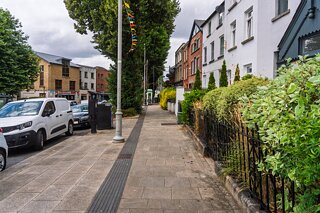
MY FRIENDS THOUGHT THAT THEY WERE TO MOVE TO CHAPEL LIZARD
They’re absolutely thrilled about the move—and who could blame them? It’s a fantastic location. But somewhere along the line, the name got slightly scrambled in translation, and they’ve fully embraced moving to "Chapel Lizard."
To be fair, they aren’t the first to make that leap. When I was a young lad, I proudly announced to my mother that I’d made a new friend who lived in Chapel Lizard. She stared at me, completely convinced I’d been spending far too much time buried in science fiction comics, having not the faintest idea I was actually talking about a picturesque village tucked along the banks of the Liffey.
The "Chapel Lizard" concept is a delightful mental image and an exceptionally sticky way to remember the name, even if it might give local historians a stroke. The "Etymology": Forget the 12th-century Anglo-Norman origins or Princess Isolde of Arthurian legend. The real story is that the village was founded by an ancient, highly religious reptile who demanded a quiet sanctuary by the river away from the chaos of the city.
Chapelizod: Dublin’s Riverside Gem Between History and Modern Transport
Tucked quietly into the wooded valley of the River Liffey just a few kilometres west of Dublin city centre, Chapelizod carries a distinctive character unlike anywhere else in the capital. While the wider area straddles both banks, the heart of historic Chapelizod lies on the north side of the Liffey. Here, terraced stone cottages, narrow lanes, and centuries of heritage create the atmosphere of a secluded country village—even while surrounded by urban life.
The Gateway to Phoenix Park: A Hidden Laneway
One of the north side's most charming features is the short, unobtrusive laneway that tucks off Main Street and leads directly up into the expanses of Phoenix Park.
For locals, this narrow pathway—often framed by high stone boundary walls—serves as a private portal straight into one of Europe's largest enclosed public parks. Within a matter of paces, you step from the dense, historic streetscape of the village into rolling green parklands, deer havens, and tree-lined avenues. It is a daily luxury for dog walkers, runners, and commuters seeking a scenic shortcut.
Better Connected: The Upgraded No 80 Bus Route
For decades, Chapelizod’s geography within a narrow river valley made traffic management and public transport a frequent topic of debate. However, public transport in the village has seen a major boost with the enhanced frequency of the No 80 bus route.
Operating between Liffey Valley and Palmerston Park via Chapelizod and the city centre, the No 80 provides regular, dependable connections throughout the day and into the night.
Higher Peak Frequency: Buses run at tight intervals during rush hour, cutting down waiting times for commuters heading into Dublin city centre.
Enhanced Off-Peak Service: Even on weekends and late evenings, the regular timetable makes evening trips and weekend leisure travel seamless without relying on private vehicles.
Better Regional Integration: Connecting directly to key retail hubs like Liffey Valley Shopping Centre while cutting across suburban hubs gives residents direct access to key services across West and South Dublin.
Heritage, History, and the Local Church
Chapelizod takes its name from Seaghdha Iseult (the Chapel of Iseult, tied to the Arthurian legend of Tristan and Iseult). That deep history is tangible when walking past St Laurence’s Church on Main Street.
St Laurence’s Church of Ireland features a 19th-century church hall integrated with a 14th-century medieval bell tower—one of the oldest surviving architectural structures in the valley. Its striking silhouette against the backdrop of the Liffey valley serves as a constant anchor to the past.
Alongside its history, Chapelizod boasts a close-knit network of local facilities and amenities:
Local Dining & Pubs: Mainstays such as The Villager pub, Mullingar House (noted for its James Joyce connections in Finnegans Wake), Café de Bróc, and Park Lane Deli supply great food, specialty coffee, and evening atmosphere.
Schools & Services: The community is anchored by St Laurence’s and St Patrick’s National Schools, local pharmacies, post services, and riverside sports clubs including local rowing and GAA clubs.
The Challenge of Long-Term Dereliction
Despite Chapelizod's soaring property desirability and enviable location, the village on the north side faces a long-standing challenge: derelict and vacant properties.
A walk down Main Street and its immediate offshoots reveals several historic structures that have stood empty, boarded up, or roofless for decades. Examples include sections of 18th-century tenement structures such as Gamble's Buildings, council-owned cottages along Mulberry Row, and properties formally listed on Dublin City Council’s Derelict Sites Register (such as 39a Main Street).
Community-led initiatives, such as the Chapelizod Dereliction arts project, have sought to draw attention to these sites by painting murals and historical photography on boarded doors. Local residents and councillors continue to lobby for compulsory purchase orders (CPOs) or regeneration plans to turn these historic eyesores into vibrant housing or community spaces.
To be fair, they aren’t the first to make that leap. When I was a young lad, I proudly announced to my mother that I’d made a new friend who lived in Chapel Lizard. She stared at me, completely convinced I’d been spending far too much time buried in science fiction comics, having not the faintest idea I was actually talking about a picturesque village tucked along the banks of the Liffey.
The "Chapel Lizard" concept is a delightful mental image and an exceptionally sticky way to remember the name, even if it might give local historians a stroke. The "Etymology": Forget the 12th-century Anglo-Norman origins or Princess Isolde of Arthurian legend. The real story is that the village was founded by an ancient, highly religious reptile who demanded a quiet sanctuary by the river away from the chaos of the city.
Chapelizod: Dublin’s Riverside Gem Between History and Modern Transport
Tucked quietly into the wooded valley of the River Liffey just a few kilometres west of Dublin city centre, Chapelizod carries a distinctive character unlike anywhere else in the capital. While the wider area straddles both banks, the heart of historic Chapelizod lies on the north side of the Liffey. Here, terraced stone cottages, narrow lanes, and centuries of heritage create the atmosphere of a secluded country village—even while surrounded by urban life.
The Gateway to Phoenix Park: A Hidden Laneway
One of the north side's most charming features is the short, unobtrusive laneway that tucks off Main Street and leads directly up into the expanses of Phoenix Park.
For locals, this narrow pathway—often framed by high stone boundary walls—serves as a private portal straight into one of Europe's largest enclosed public parks. Within a matter of paces, you step from the dense, historic streetscape of the village into rolling green parklands, deer havens, and tree-lined avenues. It is a daily luxury for dog walkers, runners, and commuters seeking a scenic shortcut.
Better Connected: The Upgraded No 80 Bus Route
For decades, Chapelizod’s geography within a narrow river valley made traffic management and public transport a frequent topic of debate. However, public transport in the village has seen a major boost with the enhanced frequency of the No 80 bus route.
Operating between Liffey Valley and Palmerston Park via Chapelizod and the city centre, the No 80 provides regular, dependable connections throughout the day and into the night.
Higher Peak Frequency: Buses run at tight intervals during rush hour, cutting down waiting times for commuters heading into Dublin city centre.
Enhanced Off-Peak Service: Even on weekends and late evenings, the regular timetable makes evening trips and weekend leisure travel seamless without relying on private vehicles.
Better Regional Integration: Connecting directly to key retail hubs like Liffey Valley Shopping Centre while cutting across suburban hubs gives residents direct access to key services across West and South Dublin.
Heritage, History, and the Local Church
Chapelizod takes its name from Seaghdha Iseult (the Chapel of Iseult, tied to the Arthurian legend of Tristan and Iseult). That deep history is tangible when walking past St Laurence’s Church on Main Street.
St Laurence’s Church of Ireland features a 19th-century church hall integrated with a 14th-century medieval bell tower—one of the oldest surviving architectural structures in the valley. Its striking silhouette against the backdrop of the Liffey valley serves as a constant anchor to the past.
Alongside its history, Chapelizod boasts a close-knit network of local facilities and amenities:
Local Dining & Pubs: Mainstays such as The Villager pub, Mullingar House (noted for its James Joyce connections in Finnegans Wake), Café de Bróc, and Park Lane Deli supply great food, specialty coffee, and evening atmosphere.
Schools & Services: The community is anchored by St Laurence’s and St Patrick’s National Schools, local pharmacies, post services, and riverside sports clubs including local rowing and GAA clubs.
The Challenge of Long-Term Dereliction
Despite Chapelizod's soaring property desirability and enviable location, the village on the north side faces a long-standing challenge: derelict and vacant properties.
A walk down Main Street and its immediate offshoots reveals several historic structures that have stood empty, boarded up, or roofless for decades. Examples include sections of 18th-century tenement structures such as Gamble's Buildings, council-owned cottages along Mulberry Row, and properties formally listed on Dublin City Council’s Derelict Sites Register (such as 39a Main Street).
Community-led initiatives, such as the Chapelizod Dereliction arts project, have sought to draw attention to these sites by painting murals and historical photography on boarded doors. Local residents and councillors continue to lobby for compulsory purchase orders (CPOs) or regeneration plans to turn these historic eyesores into vibrant housing or community spaces.
EXPLORING CHAPELIZOD