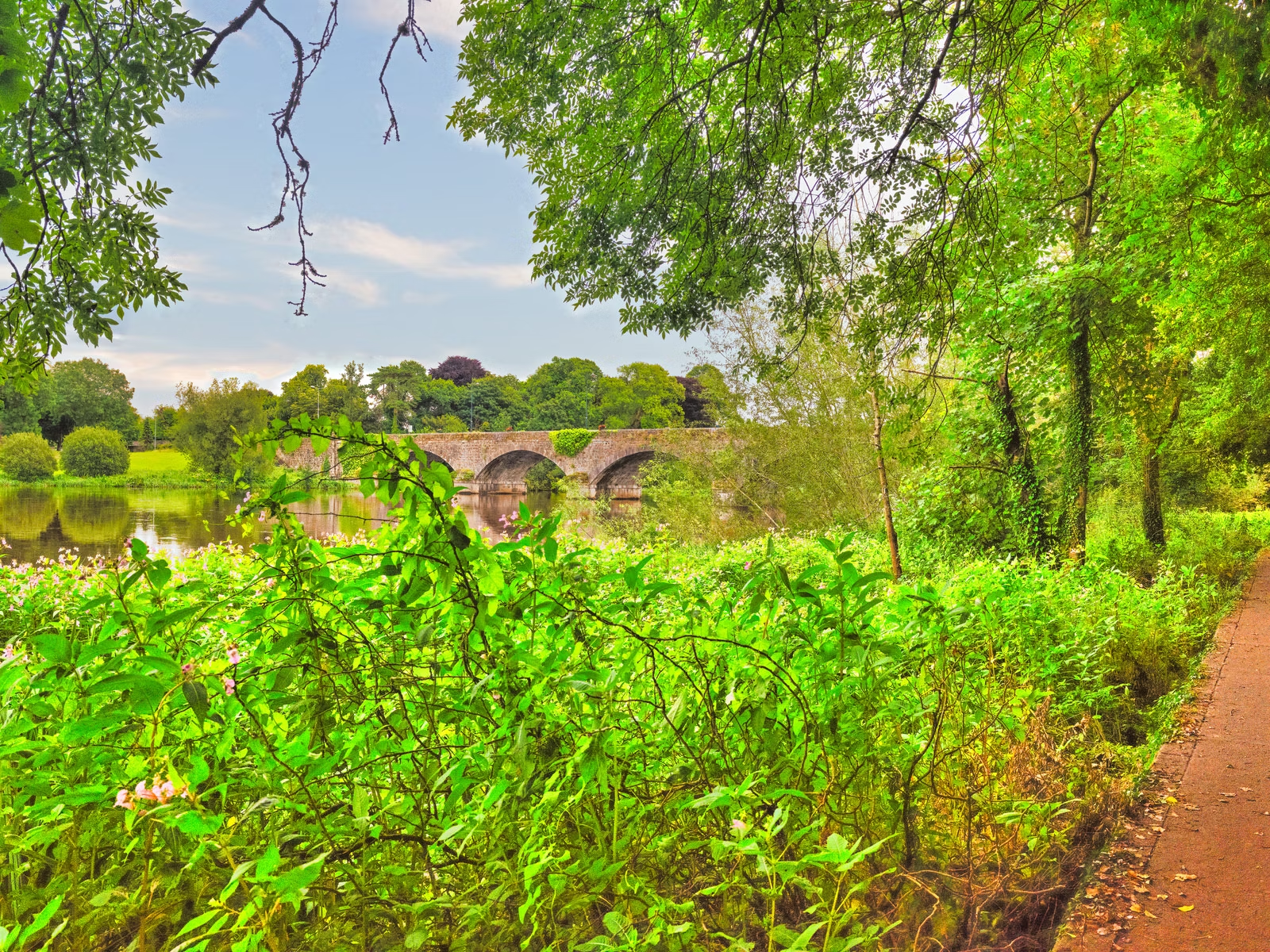
Athlunkard Bridge is far more than a practical crossing; it stands as an enduring monument to 19th-century civil engineering, conceived at a pivotal moment in the region's social and commercial history.
Designed by the renowned English architects James and George Richard Pain—who also shaped Limerick's Thomond Bridge and Baal's Bridge—construction commenced in 1826 and concluded in 1830 at an estimated cost of £7,000. Spanning the Shannon along an east–west axis, the bridge comprises five graceful granite arches faced in finely dressed local limestone, showcasing the exceptional standard of period masonry.
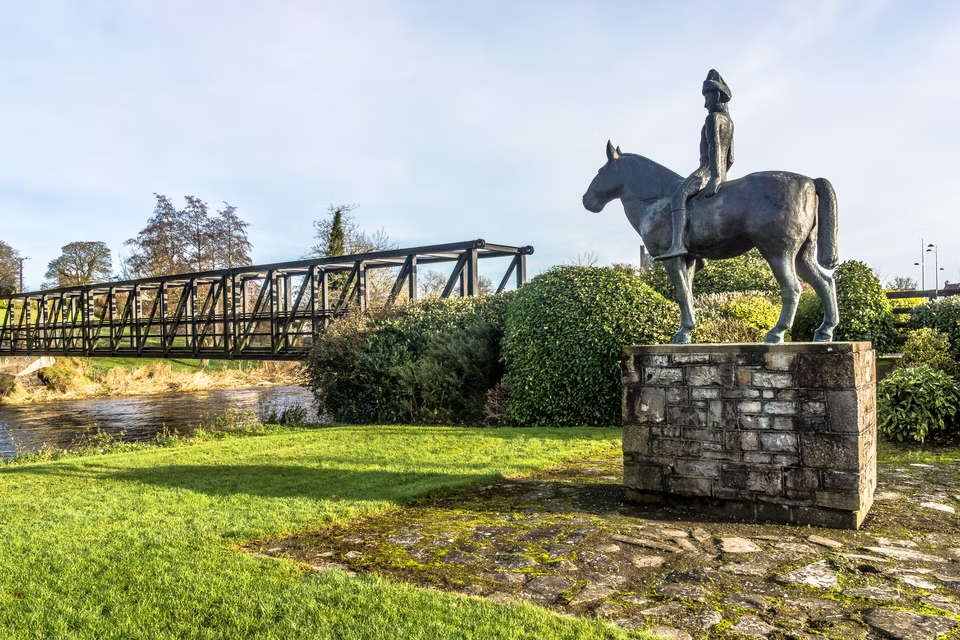
Máel Seachnaill II by James McKenna (Trim, County Meath)
I photographed this limestone equestrian sculpture on Christmas Day 2014 beside the Watergate Bridge in Trim. While its condition was somewhat neglected at the time, the surrounding setting had improved compared to previous years.
Created by the Dublin sculptor and playwright James McKenna (1933–2000), the work depicts Máel Sechnaill mac Domnaill (Máel Seachnaill II), member of the Clann Cholmáin and High King of Ireland. Following the death of Brian Boru at the Battle of Clontarf in 1014, Máel Seachnaill resumed his position as High King, presiding over the realm until his death in 1022. It is from him that the leading ruling sept of Brega, the Ó Maoilsheachlainn, claims descent.
Dunshaughlin (Domhnach Seachnaill / Dún Seachlainn), situated further east in County Meath, derives its name from Saint Seachnaill (Secundinus), a contemporary of Saint Patrick who established an early monastic settlement there in the fifth century. It is this patron saint who originally provided the personal name Máel Seachnaill—meaning "servant of Seachnaill".
The Dunshaughlin district encompasses the renowned townland of Lagore, celebrated for its seventh-century royal crannóg where extensive excavations unearthed significant early medieval antiquities. Historical surveys from the mid-sixteenth century record long-standing native families in the parish, including Muintir Uí Fhloinn and Muintir Uí Mhuirí, as well as the Uí Ruanaidh at nearby Trevet. In contrast, prominent Anglo-Norman lineages such as the Delahides, alongside the medieval religious establishments they patronised, have long since vanished from the immediate locality.
James McKenna (1933–2000): Sculptural Style and Approach
James McKenna was a foundational figure in modern Irish figurative sculpture. A co-founder of the Independent Artists group (1960) and the Sculptors' Society of Ireland (1980), as well as an elected member of Aosdána (1983), he steadfastly resisted total abstraction throughout his career. Instead, he worked in direct carving—predominantly Irish limestone, granite, and ancient bog oak—producing weighty, expressionist human and equestrian figures steeped in Celtic mythology, political struggle, and local folklore. His figures favour raw mass, visible tool marks, and gravitational grounding over slick academic polish.
Public and Institutional Sculptures in Dublin and Leinster
Ferdia for nÁth / Ferdia at the Ford (1989)
Location: Irish Museum of Modern Art (IMMA), Royal Hospital Kilmainham, Dublin Medium: Carved Granite Context & Subject: Commissioned around the mythological themes of the Táin Bó Cúailnge, this towering granite piece depicts Ferdia, the tragic brother-in-arms of Cú Chulainn, standing his ground at the river crossing. The work measures three metres in height and exemplifies McKenna’s late monumental stone style—blocky, stoic, and unyielding. It forms part of IMMA's permanent outdoor collection, donated in 2007 through the poet Desmond Egan.
Oisín in Dhiaidh na Féinne / Oisín Caught in a Time Warp (c. 1990)
Location: Áras Chill Dara (Kildare County Council Headquarters), Naas, County Kildare Medium: Carved Limestone / Composite stone Gerard Manley Hopkins Festival Context & Subject: A signature McKenna equestrian motif, depicting Oisín returned from Tír na nÓg, stranded between ancient heroic myth and the alien modern world. The work captures the rider slumping or dismounting, realising the passage of three centuries. It was installed on public view within the Kildare administrative headquarters, reflecting McKenna’s long-standing connection to the county (he lived and worked around Newbridge for much of his later life).
Famine Family (1998)
Location: St Vincent’s Hospital (former Athy Workhouse site), Athy, County Kildare Kildare County Council Medium: Carved 4,000-year-old Black Bog Oak Context & Subject: Standing approximately eight feet high, this harrowing composition was carved directly from prehistoric sub-fossil bog oak. Installed outside the historic Athy union workhouse grounds to commemorate the Great Famine, it depicts an emaciated family grouping. The natural fissures, dark patination, and rough grain of the bog wood are integrated into the gaunt figures, giving the sculpture an archaic, spectral presence.
Gerard Manley Hopkins Monument (1991)
Location: Monasterevin, County Kildare Gerard Manley Hopkins Festival Medium: Carved Limestone Context & Subject: Commissioned by the Gerard Manley Hopkins Society, this commemorative stone piece honours the English Jesuit poet who wrote many of his works while resting at nearby Monasterevin House. Characteristic of McKenna's architectural-scale heads and herm-like markers, it incorporates poetic inscriptions alongside the poet's stylised visage.
Female Figure and Tree
Location: Central Bank of Ireland Currency Centre, Sandyford, Dublin Christie’s Medium: Carved Stone Context & Subject: A corporate commission integrated into the landscape of the Central Bank's secured complex in Sandyford. McKenna juxtaposes the living, organic curve of the tree form with the grounded weight of the female figure, echoing themes of Irish nature, fertility, and sovereign continuity common to his 1970s and 1980s output.
Three Priestly Brothers and Their Limerick Memorial
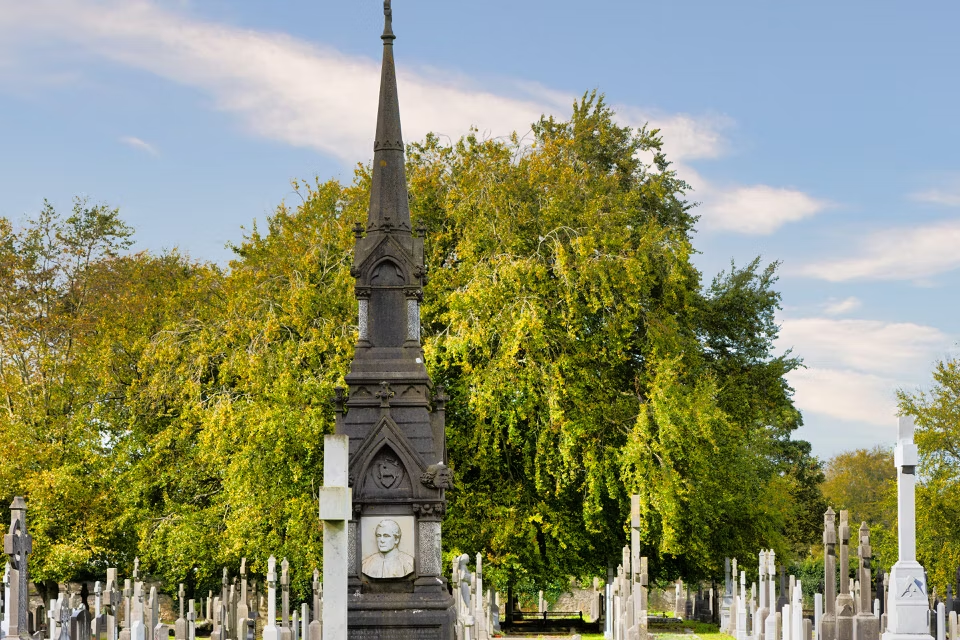
The octagonal spire monument at Mount St Lawrence Cemetery, Limerick, commemorates the distinguished Shanahan brothers—high-ranking Catholic churchmen and domestic prelates honoured with the title Reverendissimus (R.mo) and depicted in episcopal-style clerical vestments, complete with mozzetta and Roman collar.
Framed by polished granite colonnettes and carved relief portrait busts, the structure serves as a combined family burial plot and memorial cenotaph. The Latin inscription carved along the base confirms their sibling bond and dedicatory intent:
-
The Paddy Power Mural (The Fishermen)
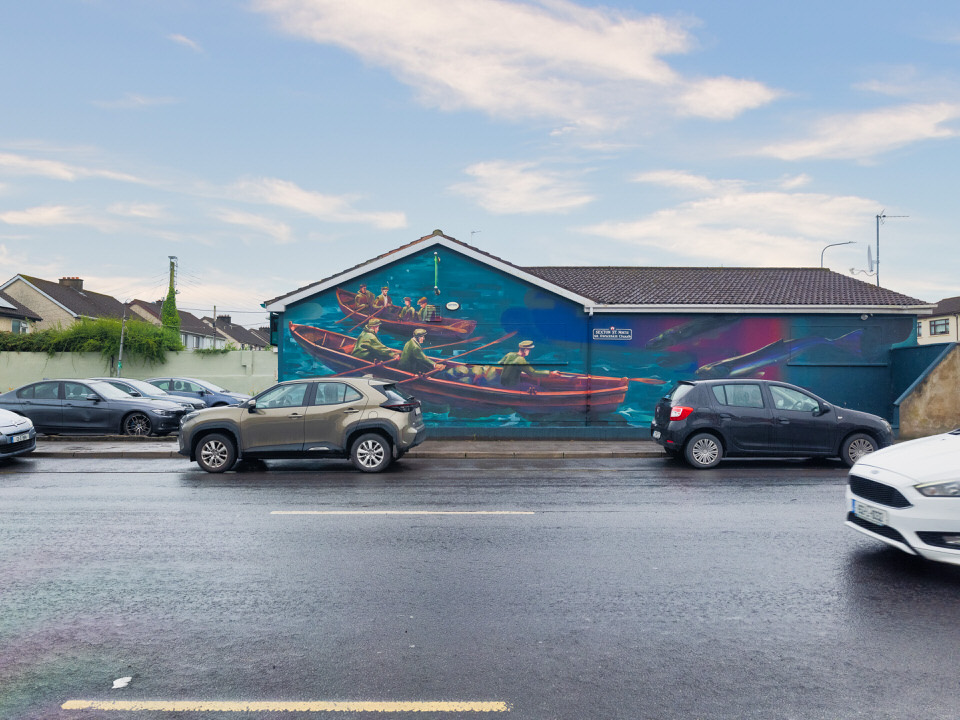
The large mural on the wall of the Paddy Power building in Thomondgate, which depicts Limerick fishermen in their traditional small boats (gandelows), was a project involving Pigtown Media and West Murals.
The Artist: The mural was created by West Murals, which is the professional name for artist Marcus O'Connor.
The Organisers: The project was a collaboration involving the Thomondgate Residents Association and the urban art group Draw Out.
Pigtown Media (run by Draw Out's Creative Director, Darren Ryan) was also involved in documenting or facilitating the project, which is why all three are associated with it in the post.
Why Limerick is Called "Pigtown"
Limerick earned the nickname "Pigtown" due to its rich history as a major international centre for the pork industry.
This reputation was built by four massive bacon factories operating in the heart of the city:
O'Mara's
Matterson's
Denny's
Shaw's (later Clover Meats)
These factories employed thousands of people and built an international reputation for their product, specifically "Limerick Ham." The industry was so central to the city's economy and daily life that the "Pigtown" nickname became a well-known and enduring part of Limerick's identity. Today, the name is celebrated in the annual Pigtown Festival.
Tanya Nunan and the 2002 Hit-and-Run
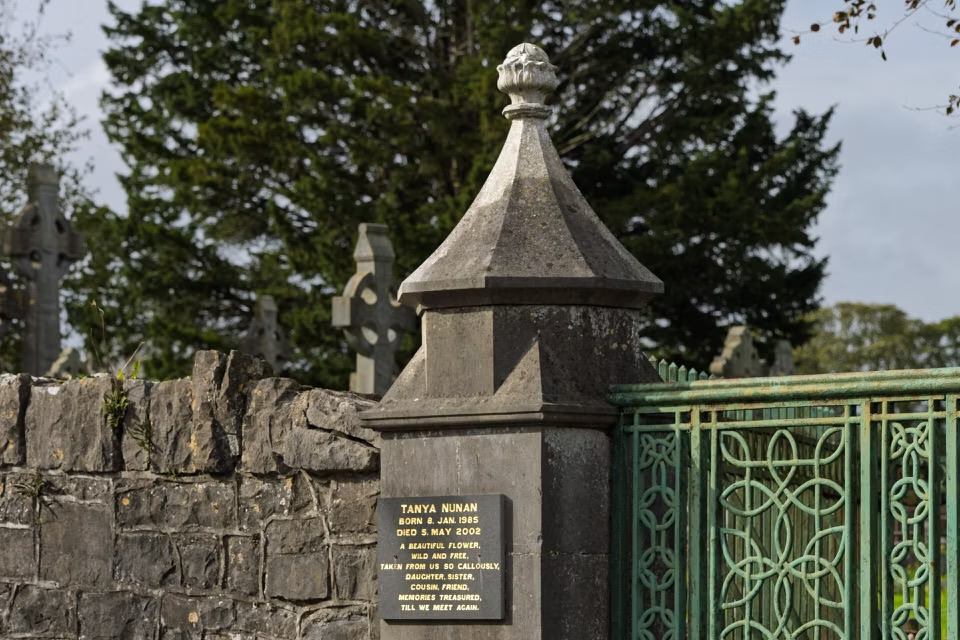
The Incident: On Sunday night, 5 May 2002, 17-year-old Tanya Nunan (from Moyross, Limerick) was walking with a friend along Bengal Terrace towards home. She was in the care of the Mid-Western Health Board and had missed her return deadline to a residential centre in O’Briensbridge.
The Collision: A car stolen earlier that evening from a residence in Georgian Villas was being pursued by an unmarked Garda vehicle. The stolen car was travelling at speeds estimated up to 70 mph the wrong way down a one-way section. The vehicle struck Tanya and another youth at Bengal Terrace. The impact threw Tanya approximately six feet into the air and 15 feet forward, killing her instantly.
The Driver and Legal Outcome: The driver, also 17, fled the scene without stopping and later claimed he did not realise someone had been killed until the following morning. He evaded arrest for several months before being apprehended in Dooradoyle, initially giving false details. He pleaded guilty at Limerick Circuit Court to dangerous driving causing death. Judge Carroll Moran sentenced him to four years' imprisonment, noting that while the crime warranted the maximum term, credit had to be given for the guilty plea—a sentence Tanya’s mother, Sharon Nunan, condemned outside court as far too lenient.
-
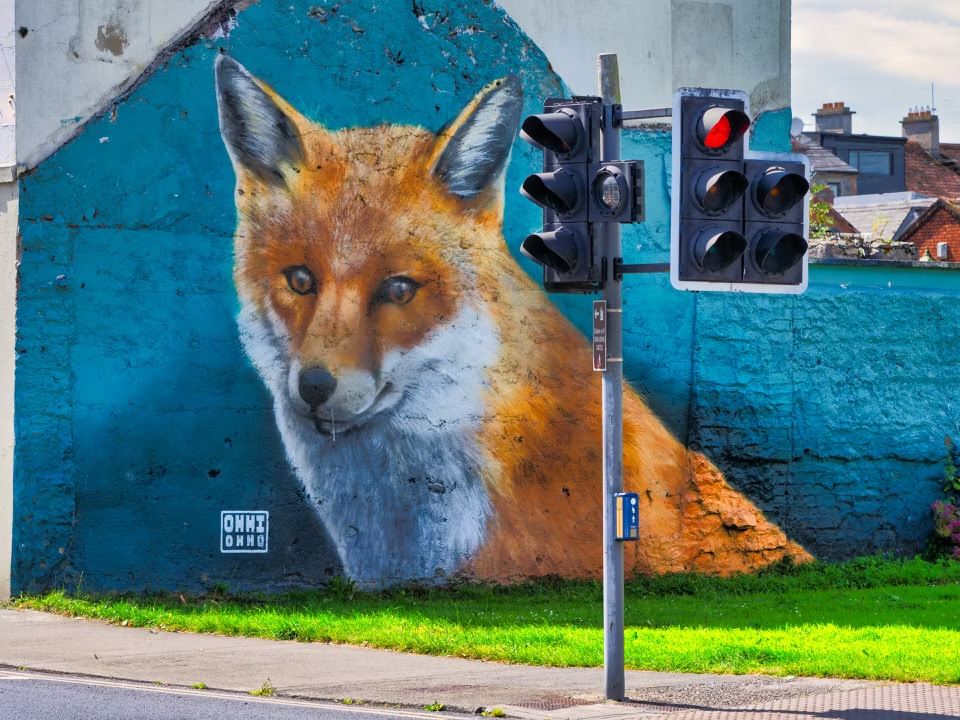
🦊 FOX MURAL BY OHHI OHNO [ATHLUNKARD STREET AND ISLAND ROAD IN LIMERICK]
The Athlunkard Fox: A Symbol of Limerick's Wildlife
Located at the prominent junction of Athlunkard Street and Island Road in Limerick city, a striking, large-scale mural of a fox captures the attention of passers-by. This impressive piece of street art is the work of the artist Ohhi Ohno, also known as Lulu Keeley.
The mural is a significant contribution to the "Wildlife Walls" initiative, an urban art project designed to celebrate and highlight the region's natural heritage. "Wildlife Walls" is a creative collaboration between the urban art specialists Draw Out and Limerick City and County Council.
The primary goal of the initiative is to foster greater public awareness of Limerick's rich biodiversity. It achieves this by commissioning vibrant, high-profile murals that depict indigenous Irish animals and plants. The fox, a familiar yet wild resident of both urban and rural landscapes, serves as a powerful and visible reminder of the wildlife that shares the city environment.
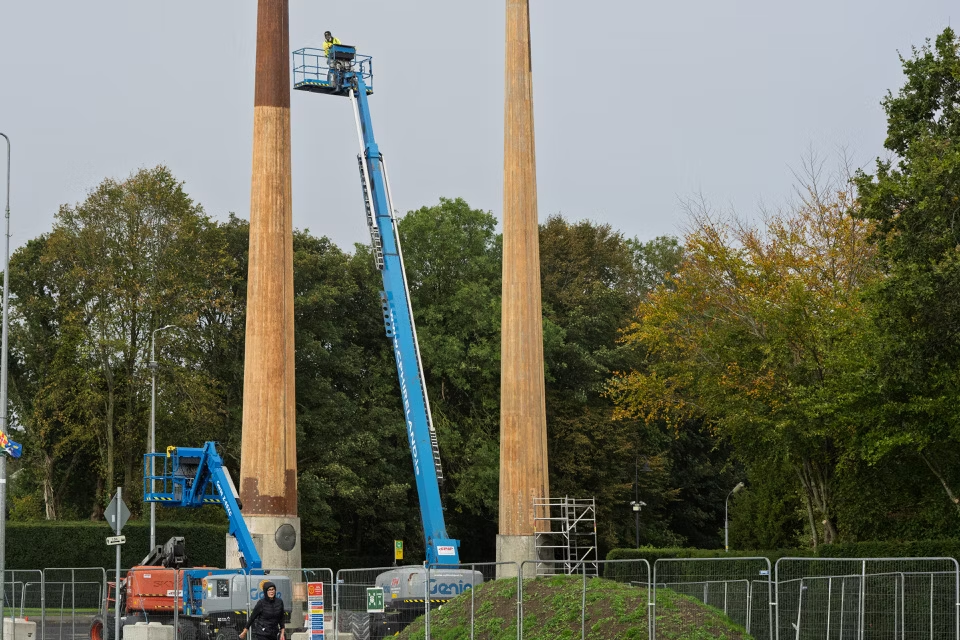
Discover the architecture behind the University of Limerick entrance landscape: de Blacam and Meagher’s 25-metre timber flagpoles and Sean Scully’s Crann Solais (Wall of Light).
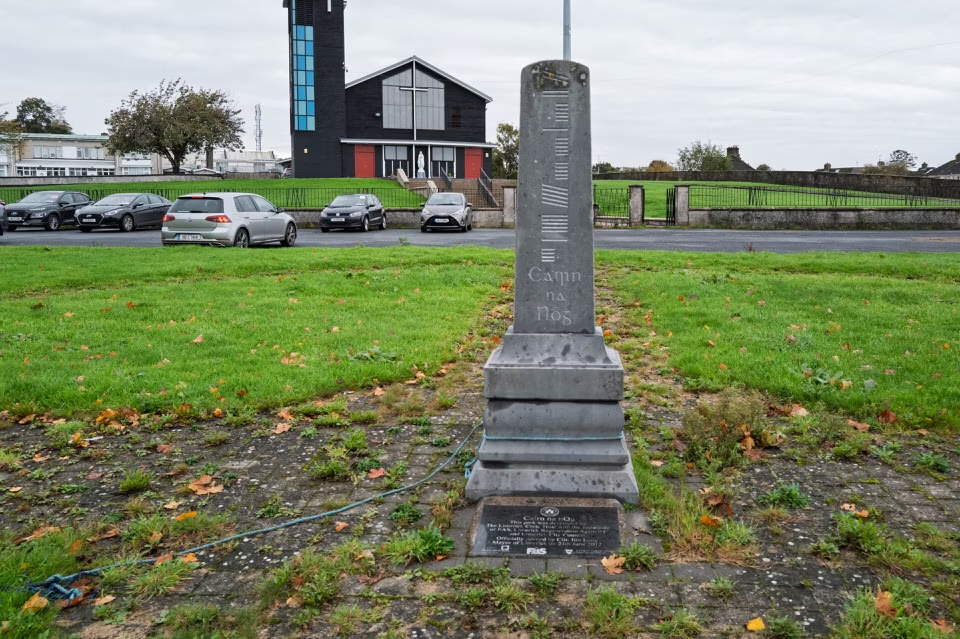
Cairn na nÓg Outside The Church Of Our Lady Of Lourdes
Identity of the Stone Structure: The stone monument stands in Cairn na nÓg, an amenity and memorial green space created within the curtilage of Our Lady of Lourdes Church on Childers Road, Rosbrien, Limerick.
The Inscription: The face of the limestone pillar is carved with a vertical Ogham inscription along a central stem line, followed beneath by the Gaelic script:
Cairn na nÓg - (Translating loosely to "Cairn/Mound of the Young" or "Youth's Cairn".)
The Commemorative Plaque: Mounted into the paving at the foot of the pillar is a dedication plaque recording its origins:
Cairn na nÓg: This park was developed by The Limerick Civic Trust with the assistance of FÁS, Limerick Regeneration Agencies and Limerick City Council.
Officially opened by Cllr. Jim Long, Mayor of Limerick on 24th June 2012.
The Tether / Blue Rope
Someone has looped a heavy-duty blue poly rope around the plinth of the monument as a makeshift tethering anchor for a horse or pony grazing on the open green.
In suburban Limerick estates and regeneration areas, tethering horses on parish greens, amenity grounds, and roadside verges remains a long-standing local practice. The weighted base and stepped collar of this limestone pillar make a ready-made tethering post.
False Search Results: Google returned the following incorrect result - "This is the commemorative pillar standing in Cairn na nÓg, a community amenity park in Southill, Limerick. In the background is the distinctive Holy Family Church (Southill) with its blue-tinted lantern/tower."