The Redevelopment Of South Richmond Street Is Transforming The Physical And Socio-Cultural Fabric Of Portobello
The Urban Cartographer
An urban appraisal of Portobello centred on the South Richmond Street spine. Examines the evolution of the Grand Canal harbour and Portobello Bridge, the institutional heritage of Portobello House, ongoing commercial redevelopment, and the cultural displacement reshaping the neighbourhood's bohemian character.
MOBILE FRIENDLY AND MUCH FASTER
GO THERE
MURALS BY SHANE SUTTON
Apple iPhone 18 Pro
Presented By William Murphy - The Urban Cartographer - Apple iPhone 18 Pro Photographed 30 September 2026
The Redevelopment Of South Richmond Street Is Transforming The Physical And Socio-Cultural Fabric Of Portobello
Author: William Murphy - The Urban Cartographer
|
03. Oct 2026
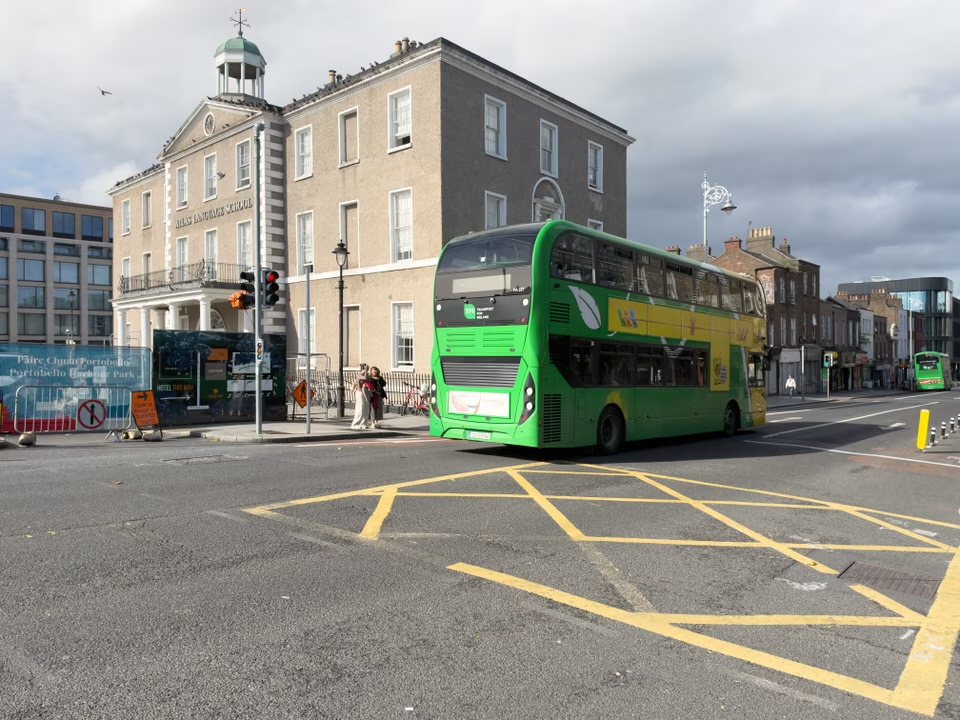
TODAY I USED AN iPHONE 18 Pro The Redevelopment Of South Richmond Street Is Transforming The Physical And Socio-Cultural Fabric Of Portobello South Richmond Street serves as the arterial threshold connecting Dublin’s core (via Camden Street and Kelly’s Corner) directly to the Grand Canal. Historically a lively commercial thoroughfare serving the surrounding residential red-brick terraces and the historic Jewish Quarter (“Little Jerusalem”), the street has long been defined by practical trades, grocers, and neighbourhood taverns. Over the past decade, South Richmond Street has transformed into a culinary and nightlife corridor. Traditional local retail has largely yielded to speciality coffee shops, artisanal bakeries, upscale wine bars, and international eateries. While this has injected vitality into the street, the corridor has also contended with pockets of stalled commercial development and persistent dereliction, notably around older vacant shopfronts like the long-disused Bambrick's site. Portobello Harbour was originally developed in the late 18th century as a bustling terminal basin for passenger fly-boats and cargo barges plying the Grand Canal. Flanked by warehouses, stores, and later the Ever-Ready battery factory, the original water basin was drained and infilled in 1948. For decades, the site existed as a tarmac expanse and later as Portobello Plaza—a public open space favoured by skateboarders, cyclists, and canal-side strollers. In the late 2010s and early 2020s, the space became a battleground over urban planning. Dublin City Council approved the sale and redevelopment of a substantial portion of the civic plaza for a multi-storey hotel development (the NYX Hotel Portobello). The subsequent construction and prolonged closure of the surrounding open area sparked sustained local campaigns advocating for the protection of uncommercialised public realm along the water's edge. Constructed in 1791 and named La Touche Bridge (after William Digges La Touche, director of the Grand Canal Company), Portobello Bridge spans the canal lock, carrying vehicular and pedestrian traffic across to Rathmines. Architecturally, the bridge forms the focal bottleneck of the district. In recent years, its character has shifted markedly toward active transport. The bridge and its immediate quays have absorbed major segregated cycle tracks linking the canal greenway into the central business district. While the bridge retains its Georgian masonry and historic lock gates, the heavy traffic management schemes have shifted its atmosphere from a tranquil canal crossing into a transit-dominated interchange. Dominating the harbour’s northern flank stands Portobello House, designed by James Colbourne and opened in 1807 as the Grand Canal Hotel. It was designed to cater to wealthy passengers boarding canal passenger packets travelling westward. Over its two centuries, the building has served diverse roles: Portobello House remains the architectural anchor of the area, retaining its imposing classical proportions and pedimented façade, even as modern glass-and-steel developments have enclosed the surrounding canal banks. The redevelopment wave around the South Richmond Street spine has transformed the physical and socio-cultural fabric of Portobello: Portobello is caught between classic gentrification and urban renewal: Portobello has not merely become "more attractive" or "less charming" in absolute terms; rather, it has transitioned from an unvarnished, bohemian inner suburb into an affluent, polished urban village. [[shortcode.pageone.0002]]The Redevelopment Of South Richmond Street
The Spine: South Richmond Street
The Harbour and the Basin
The Bridge: La Touche / Portobello Bridge
The College: Portobello House
Reconstruction, Redevelopment, and Displacement
Up-Market Shift, Lost Charm, or Heightened Appeal?
Related Topics
THE LEGACY CATALOG
Examples Of Waterford Walls Murals
HIGH RESOLUTION PHOTOGRAPHS PLUS MAP
Apple iPhone 18 Pro
LET MISTER SCREEN DIRECT YOU
GLOBAL INDEX OF PHOTO GALLERIES
DEANSGRANGE CEMETERY
THE URBAN CARTOGRAPHER
MURALS BY SHANE SUTTON
The Redevelopment Of South Richmond Street Is Transforming The Physical And Socio-Cultural Fabric Of Portobello - Presented By The William Murphy - The Urban Cartographer