THE RISE AND FALL OF A RESTAURANT
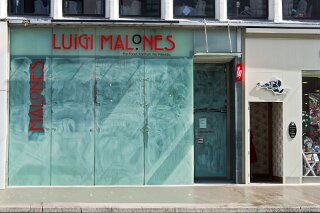
WHEN I VISITED LIMERICK IN 2011 I NOTICED THAT LUIGI MALONES HAD CEASED [IN 2025 THE DUBLIN RESTAURANT ALSO CLOSED]
Origins and Concept
Luigi Malone’s was established in 1997, opening its flagship restaurant in Dublin’s Temple Bar on the corner of Temple Bar Square and Cecilia Street. The concept reflected the high-volume, casual dining boom of the Celtic Tiger era, offering a sprawling menu designed to cater to everyone—pizza, pasta, burgers, fajitas, steaks, and cocktails under one roof. Following the initial success in the capital, the brand expanded into Cork (Emmet Place, opposite the Cork Opera House) and Limerick.
The Limerick Closure vs. Dublin and Cork Survival
January 2011 Liquidation: The wider group entered liquidation in early January 2011, hit hard by the post-2008 economic crash and a dramatic contraction in consumer spending.
Limerick Shutters: The Limerick branch lacked the footfall density of the capital and the dedicated cultural audience of Cork. Facing severe regional downturn pressures and weaker unit economics, it was deemed unviable to rescue and ceased trading permanently.
Restructuring in Dublin and Cork: Both Dublin and Cork occupied prime real estate and were successfully restructured out of the 2011 liquidation, preserved by high tourist volumes in Temple Bar and steady pre-theatre dining in Cork.
Why Dublin Failed While Cork Survived
The "Busy but Bust" Reality in Temple Bar: While the Dublin restaurant often looked busy, the underlying business model had become increasingly fragile:
Outdated Format & Menu Repositioning: The "all-things-to-everyone" mega-menu fell out of favour as modern diners shifted towards specialised, authentic casual dining. Attempts to raise menu prices into an upmarket tier without a corresponding leap in culinary quality created a glaring gap between customer expectations and actual value.
Loss of Local Trade & Soaring Overheads: High commercial rents, steep council rates, and rising operational costs meant margins were razor-thin. Having long lost the repeat trade of local Dubliners, the venue became entirely reliant on transient tourist footfall.
The 2025 Closure and the Public "Excuse": The restaurant officially closed its doors on 13 April 2025 after 28 years. Management publicly attributed the closure to prolonged public realm construction and paving delays outside the Cecilia Street entrance. In reality, while the disruption undoubtedly choked off footfall, it served primarily as a convenient public scapegoat; the works merely accelerated the end for a legacy business whose commercial model had already run out of road.
Cork’s Enduring Resilience: Cork avoided these structural traps. Its position directly opposite the Cork Opera House provides an enduring, loyal local customer base. Unburdened by the volatile tourist dependency and punishing property overheads of Temple Bar, the Emmet Place venue maintained steady viability.
Founders and the Initial Concept
Luigi Malone’s was founded by Don Jeffery alongside business partners in the late 1990s. Jeffery had previously co-owned hospitality operations in Munich and London before bringing the high-capacity, casual dining model to Ireland. During this initial era, the business operated as a centralised restaurant group covering Dublin (Temple Bar), Cork (Emmet Place), and Limerick.
The 2011 Liquidation and the Ownership Split
The single, unified ownership structure broke apart in January 2011 when the overarching parent company went into liquidation.
Breakup of the Chain: The liquidator offered the individual branches for sale as going concerns. While Limerick was permanently shut and sold off, Dublin and Cork were bought out and restructured as separate operating entities, effectively moving to an independent/franchise operational model.
Dublin: Operated under its own separate management company until its closure in April 2025.
Cork: Retained core founders and local management, severing the financial liabilities of the broader national group.
Are the Same People Running the Cork Operation?
Yes, in terms of both local ownership and day-to-day management, the Cork operation has maintained exceptional continuity:
Operational Continuity: The day-to-day running of the Emmet Place venue has been led by Morad Gharib for over 23 years. Gharib originally trained in the Temple Bar branch in the late 1990s before moving south to help launch the Cork restaurant in late 2000.
Local Rootedness: Founder Don Jeffery remained closely tied to the Cork hospitality scene (including ventures like Thompsons on MacCurtain Street and local business trade associations).
While Dublin became an isolated commercial unit that ultimately fell victim to rising overheads and changing dining habits, Cork survived because it transitioned into a genuine, locally anchored institution run by the same core team on the ground for nearly a quarter of a century.
Origins and Concept
Luigi Malone’s was established in 1997, opening its flagship restaurant in Dublin’s Temple Bar on the corner of Temple Bar Square and Cecilia Street. The concept reflected the high-volume, casual dining boom of the Celtic Tiger era, offering a sprawling menu designed to cater to everyone—pizza, pasta, burgers, fajitas, steaks, and cocktails under one roof. Following the initial success in the capital, the brand expanded into Cork (Emmet Place, opposite the Cork Opera House) and Limerick.
The Limerick Closure vs. Dublin and Cork Survival
January 2011 Liquidation: The wider group entered liquidation in early January 2011, hit hard by the post-2008 economic crash and a dramatic contraction in consumer spending.
Limerick Shutters: The Limerick branch lacked the footfall density of the capital and the dedicated cultural audience of Cork. Facing severe regional downturn pressures and weaker unit economics, it was deemed unviable to rescue and ceased trading permanently.
Restructuring in Dublin and Cork: Both Dublin and Cork occupied prime real estate and were successfully restructured out of the 2011 liquidation, preserved by high tourist volumes in Temple Bar and steady pre-theatre dining in Cork.
Why Dublin Failed While Cork Survived
The "Busy but Bust" Reality in Temple Bar: While the Dublin restaurant often looked busy, the underlying business model had become increasingly fragile:
Outdated Format & Menu Repositioning: The "all-things-to-everyone" mega-menu fell out of favour as modern diners shifted towards specialised, authentic casual dining. Attempts to raise menu prices into an upmarket tier without a corresponding leap in culinary quality created a glaring gap between customer expectations and actual value.
Loss of Local Trade & Soaring Overheads: High commercial rents, steep council rates, and rising operational costs meant margins were razor-thin. Having long lost the repeat trade of local Dubliners, the venue became entirely reliant on transient tourist footfall.
The 2025 Closure and the Public "Excuse": The restaurant officially closed its doors on 13 April 2025 after 28 years. Management publicly attributed the closure to prolonged public realm construction and paving delays outside the Cecilia Street entrance. In reality, while the disruption undoubtedly choked off footfall, it served primarily as a convenient public scapegoat; the works merely accelerated the end for a legacy business whose commercial model had already run out of road.
Cork’s Enduring Resilience: Cork avoided these structural traps. Its position directly opposite the Cork Opera House provides an enduring, loyal local customer base. Unburdened by the volatile tourist dependency and punishing property overheads of Temple Bar, the Emmet Place venue maintained steady viability.
Founders and the Initial Concept
Luigi Malone’s was founded by Don Jeffery alongside business partners in the late 1990s. Jeffery had previously co-owned hospitality operations in Munich and London before bringing the high-capacity, casual dining model to Ireland. During this initial era, the business operated as a centralised restaurant group covering Dublin (Temple Bar), Cork (Emmet Place), and Limerick.
The 2011 Liquidation and the Ownership Split
The single, unified ownership structure broke apart in January 2011 when the overarching parent company went into liquidation.
Breakup of the Chain: The liquidator offered the individual branches for sale as going concerns. While Limerick was permanently shut and sold off, Dublin and Cork were bought out and restructured as separate operating entities, effectively moving to an independent/franchise operational model.
Dublin: Operated under its own separate management company until its closure in April 2025.
Cork: Retained core founders and local management, severing the financial liabilities of the broader national group.
Are the Same People Running the Cork Operation?
Yes, in terms of both local ownership and day-to-day management, the Cork operation has maintained exceptional continuity:
Operational Continuity: The day-to-day running of the Emmet Place venue has been led by Morad Gharib for over 23 years. Gharib originally trained in the Temple Bar branch in the late 1990s before moving south to help launch the Cork restaurant in late 2000.
Local Rootedness: Founder Don Jeffery remained closely tied to the Cork hospitality scene (including ventures like Thompsons on MacCurtain Street and local business trade associations).
While Dublin became an isolated commercial unit that ultimately fell victim to rising overheads and changing dining habits, Cork survived because it transitioned into a genuine, locally anchored institution run by the same core team on the ground for nearly a quarter of a century.