MANY IN LIMRICK WERE DISAPPOINTED BY THIS SCULPTURE - WHAT ABOUT YOU
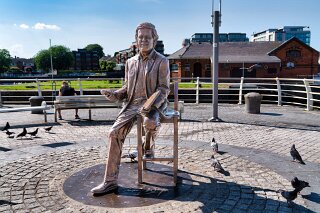
A MIXED REACTION FOR THE LIMERICK TRIBUTE TO SIR TERRY WOGAN [PHOTOGRAPHED 18 MAY 2018]
When Limerick City and County Council unveiled a life-sized bronze memorial to Sir Terry Wogan at Harvey’s Quay in June 2017, the goal was to celebrate the city’s most famous broadcasting son. Crafted by sculptor Rory Breslin at a public cost of €58,500, the statue depicts Wogan seated with microphone and notes in hand—a nod to his decades at the pinnacle of British and Irish airwaves.
The public reaction, however, was swift and sharply divided:
Contested Likeness: Critics and passers-by questioned the facial resemblance, with social media commentators cheekily comparing the bronze figure to musician Nick Cave, actor William H. Macy, or characters from Twin Peaks rather than the genial television personality.
Public Expenditure: With an outlay of nearly €60,000 in civic funding, the perceived shortfall in portrait fidelity drew scrutiny from ratepayers and local observers.
Artistic Critique: Several prominent figures within the Irish arts community voiced disappointment, arguing that the traditional civic monument format felt too rigid and uninspired to capture Wogan’s effervescent personality.
Despite early mockery and sporadic incidents of vandalism, the memorial retains staunch defenders. Representatives from the local council, city residents, and dedicated fans—the broadcaster’s beloved "TOGs" (Terry’s Old Geezers)—continue to champion the statue as a sincere, permanent tribute to a Limerick native who became one of the most cherished voices in broadcasting history.
Fact Check & Contextual Background
Terry Wogan’s Fame in Ireland vs the UK: Sir Terry Wogan was universally recognised across the Republic of Ireland due to his early RTÉ broadcasting career and the widespread availability of BBC radio and television in Irish households. However, his cultural status differed markedly between the two countries. In Britain, he was a peerless daily institution—the warmth and wit of the BBC Radio 2 breakfast show, host of Blankety Blank and the Wogan chat show, and the long-time voice of Children in Need and the Eurovision Song Contest.
In Ireland, he was regarded fondly as an eminent émigré broadcaster, but he belonged primarily to British daily cultural life, with the exception of his native Limerick, where he held the Freedom of the City and remained a local hero.
Fanbase Acronym: The acronym TOGs stands for "Terry's Old Geezers" (alongside "Terry's Old Gals"), rather than "Geysers".
The Sculptor (Rory Breslin): Rory Breslin is an accomplished and respected Irish figurative sculptor. A graduate of the National College of Art and Design (NCAD) who trained across Europe and co-founded the Callow Bronze Foundry, Breslin is best known for his bronze works and classical masks inspired by Edward Smyth’s 18th-century River Gods. While public portraiture of modern celebrities often invites fierce debate over photographic exactness, Breslin’s broader catalogue is celebrated for its craftsmanship and mastery of the medium.
When Limerick City and County Council unveiled a life-sized bronze memorial to Sir Terry Wogan at Harvey’s Quay in June 2017, the goal was to celebrate the city’s most famous broadcasting son. Crafted by sculptor Rory Breslin at a public cost of €58,500, the statue depicts Wogan seated with microphone and notes in hand—a nod to his decades at the pinnacle of British and Irish airwaves.
The public reaction, however, was swift and sharply divided:
Contested Likeness: Critics and passers-by questioned the facial resemblance, with social media commentators cheekily comparing the bronze figure to musician Nick Cave, actor William H. Macy, or characters from Twin Peaks rather than the genial television personality.
Public Expenditure: With an outlay of nearly €60,000 in civic funding, the perceived shortfall in portrait fidelity drew scrutiny from ratepayers and local observers.
Artistic Critique: Several prominent figures within the Irish arts community voiced disappointment, arguing that the traditional civic monument format felt too rigid and uninspired to capture Wogan’s effervescent personality.
Despite early mockery and sporadic incidents of vandalism, the memorial retains staunch defenders. Representatives from the local council, city residents, and dedicated fans—the broadcaster’s beloved "TOGs" (Terry’s Old Geezers)—continue to champion the statue as a sincere, permanent tribute to a Limerick native who became one of the most cherished voices in broadcasting history.
Fact Check & Contextual Background
Terry Wogan’s Fame in Ireland vs the UK: Sir Terry Wogan was universally recognised across the Republic of Ireland due to his early RTÉ broadcasting career and the widespread availability of BBC radio and television in Irish households. However, his cultural status differed markedly between the two countries. In Britain, he was a peerless daily institution—the warmth and wit of the BBC Radio 2 breakfast show, host of Blankety Blank and the Wogan chat show, and the long-time voice of Children in Need and the Eurovision Song Contest.
In Ireland, he was regarded fondly as an eminent émigré broadcaster, but he belonged primarily to British daily cultural life, with the exception of his native Limerick, where he held the Freedom of the City and remained a local hero.
Fanbase Acronym: The acronym TOGs stands for "Terry's Old Geezers" (alongside "Terry's Old Gals"), rather than "Geysers".
The Sculptor (Rory Breslin): Rory Breslin is an accomplished and respected Irish figurative sculptor. A graduate of the National College of Art and Design (NCAD) who trained across Europe and co-founded the Callow Bronze Foundry, Breslin is best known for his bronze works and classical masks inspired by Edward Smyth’s 18th-century River Gods. While public portraiture of modern celebrities often invites fierce debate over photographic exactness, Breslin’s broader catalogue is celebrated for its craftsmanship and mastery of the medium.